



Pulsar Spiking Neural Processor for Ambient Intelligence
The first mass-market, neuromorphic microcontroller for the sensor edge

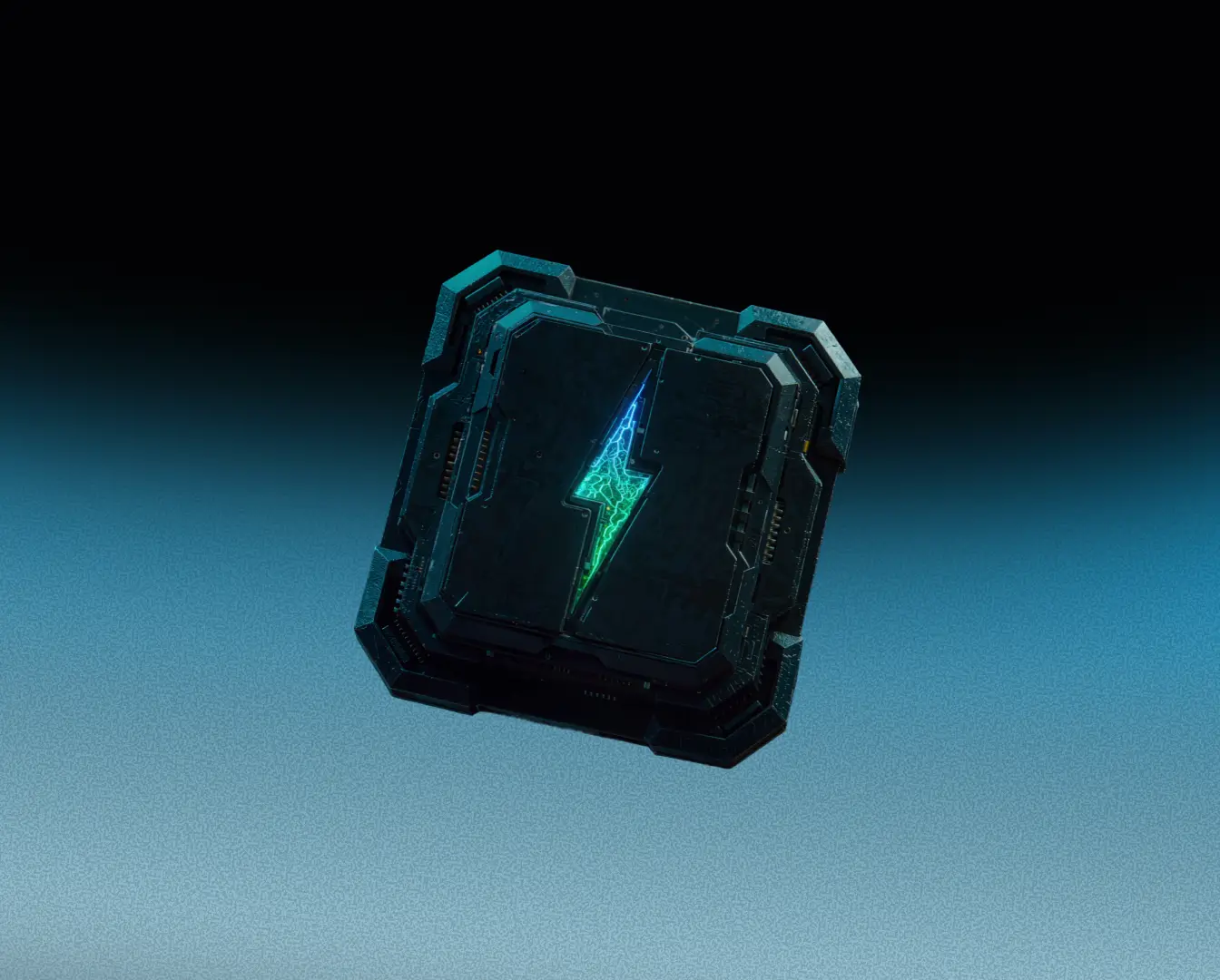
Innatera Pulsar is the first neuromorphic microcontroller built for real-time intelligence at the sensor edge. Delivering brain-like efficiency in a micro-watt power envelope, it enables always-on, responsive devices across wearables, IoT, and industrial systems.
Where our technology makes a difference
Always-on intelligence without draining battery
Pulsar brings real-time, event-driven intelligence directly to sensor-powered devices, enabling sub-millisecond responsiveness at microwatt power levels. This means application processors stay asleep until truly needed. Enabling a much greater battery life for features like human detection, gesture recognition, and smart environmental sensing without cloud dependence.
Smarter sensors for the edge
Pulsar empowers sensor makers to deliver smarter, self-contained modules. By embedding neuromorphic intelligence directly at the edge, Pulsar enables faster development cycles, lower component costs, and smarter, event-driven sensors that are ready for integration across applications.

Development made easy with Talamo SDK
Building brain-inspired AI doesn’t mean starting from scratch. Pulsar’s Talamo SDK allows developers to create spiking neural network models or port existing TensorFlow and PyTorch models easily. This is a complete neuromorphic toolchain – from model design and training to hardware deployment. No need for a PHD or new training.

Build your model journey
with Talamo SDK
Pulsar brings real-time, event-driven intelligence directly to your devices, enabling sub-millisecond responsiveness at microwatt power levels.
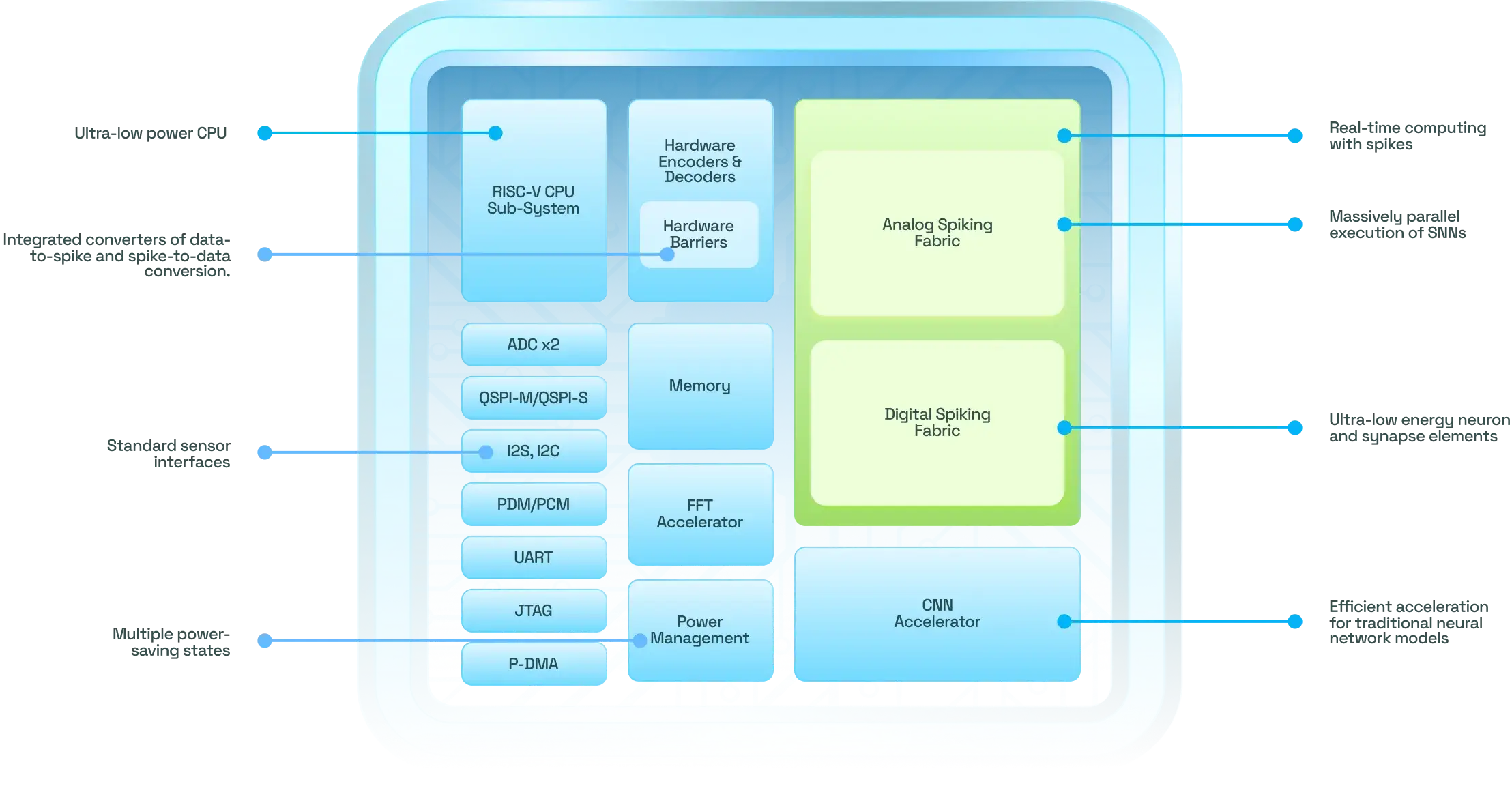
Powered by brain-inspired architecture: Spiking Neural Networks (SNNs)
Discover how Pulsar can power your innovation

Compute
Heterogeneous neuromorphic architecture with SNN, RISC-V, CNN, and FFT accelerators
01
Memory
Embedded low-latency SRAM optimized for real-time sensor processing
02
Package
2.8 × 2.6 mm WLCSP, industrial range –40 °C to 125 °C
03
Real-World use cases
Consumer electronics 
- Speech/audio recognition
- Audio processing
- Human presence detection & recognition
- Gesture recognition
Sensor inputs: camera, microphone, radar
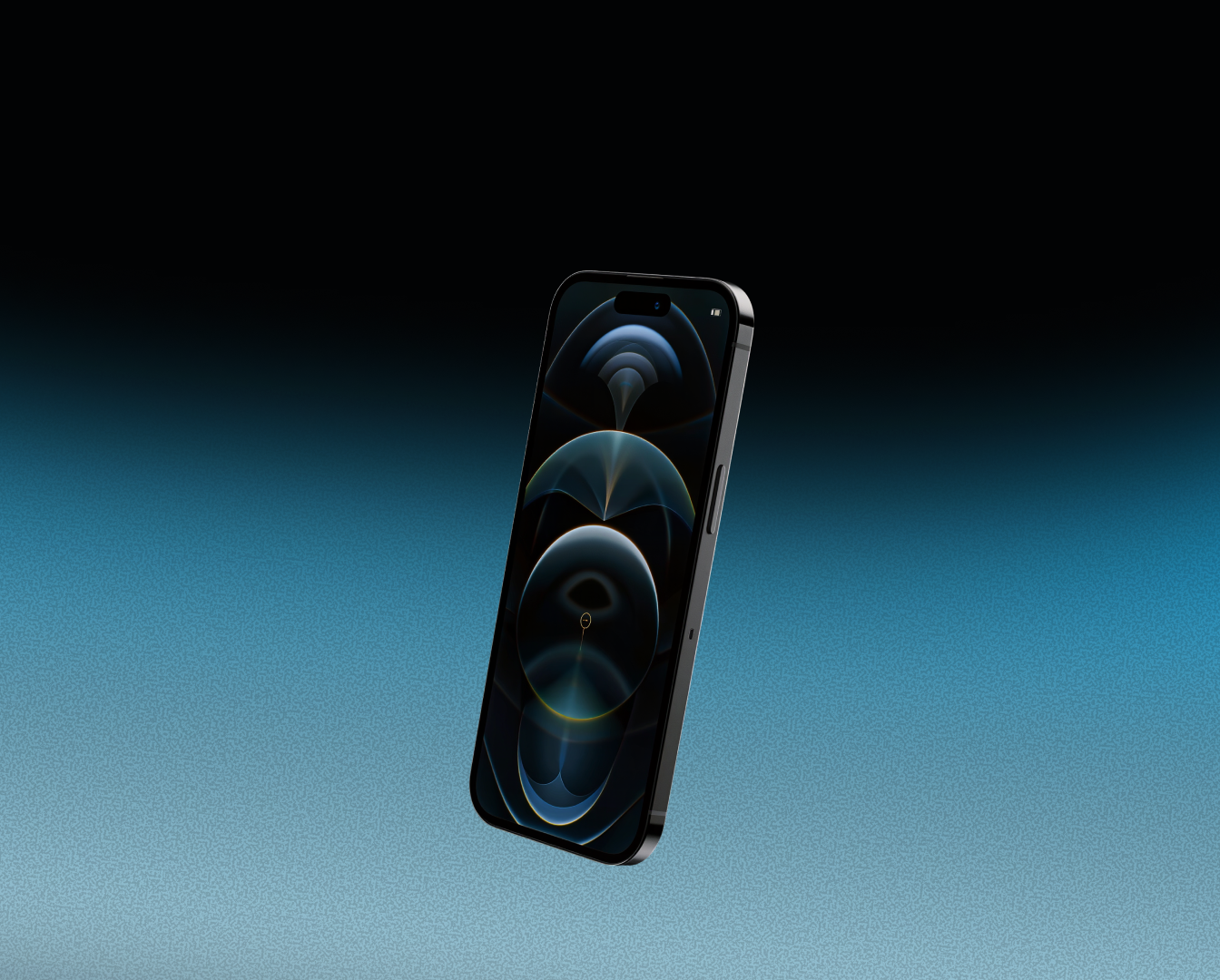
IoT & Smart Home 
- Presence and motion sensing
- Ambient audio and anomaly detection
- Ultra-low-power, always-on operation
Sensor inputs: camera, radar, infrared
Industrial IoT
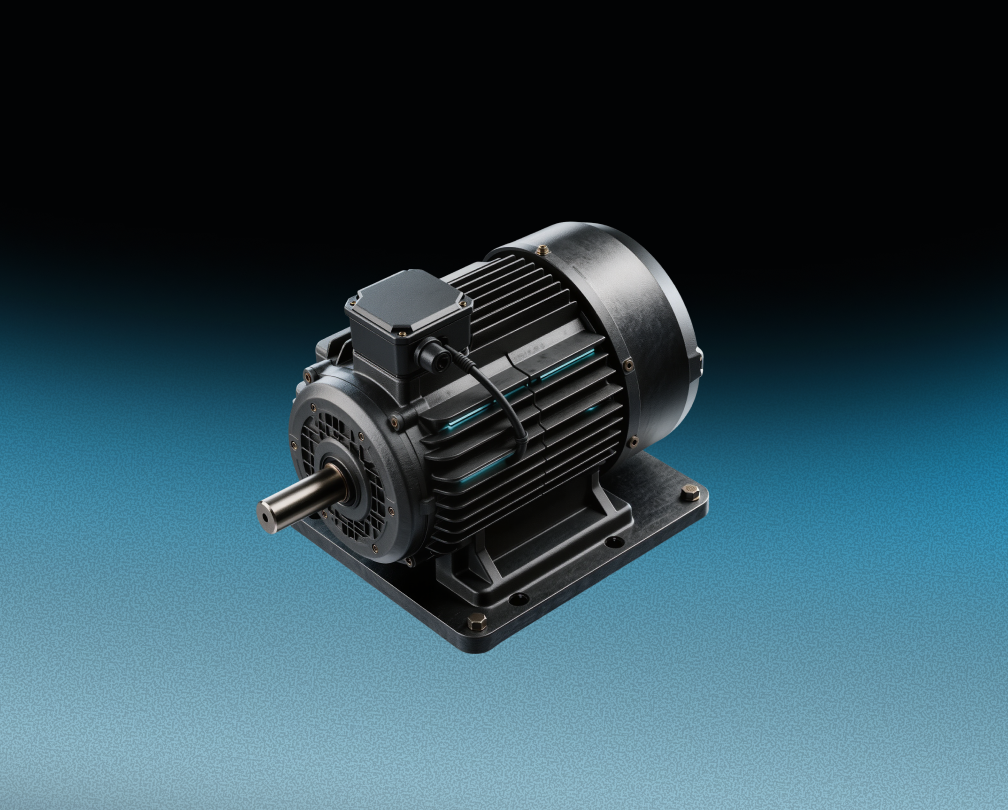
- Predictive maintenance
- On-board perception for autonomous operation
Sensor inputs: IMU, microphone
Wearables
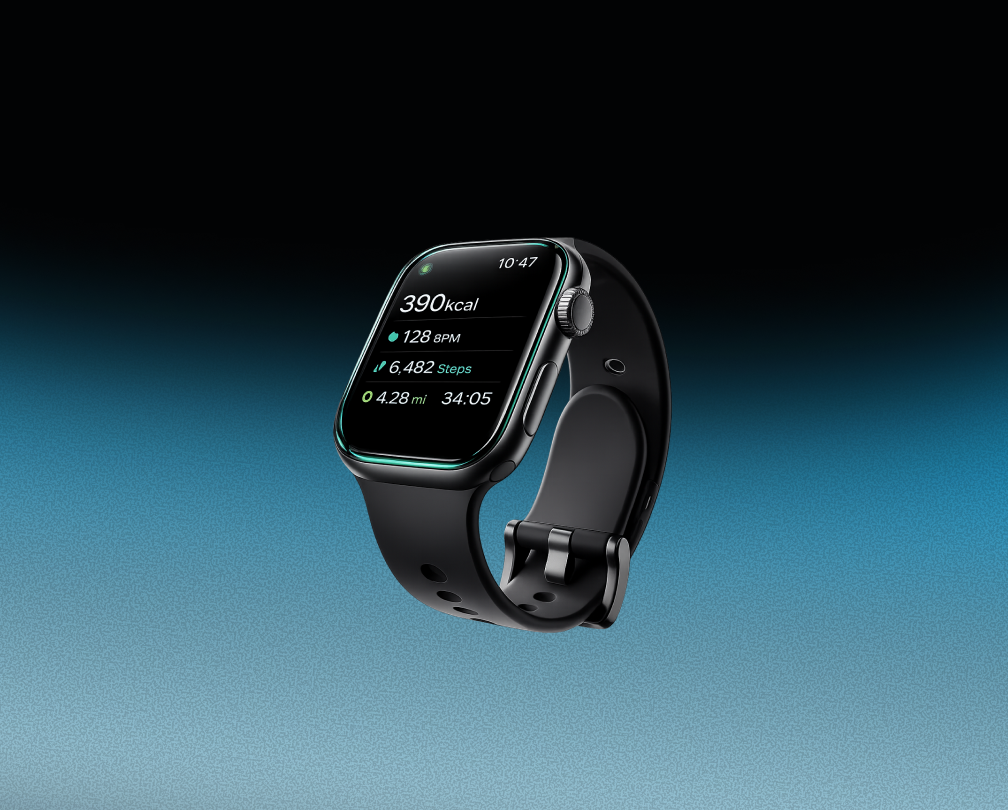
- ECG pattern analysis
- IMU-based motion analysis
- Fall and anomaly detection
Sensor inputs: ECG, PPG, EMG


Neuromorphic vs. Conventional AI
State-of-the-art
Pulsar
Over 100x lower

Energy per inference
Over 33x lower
Model size
Audio scene classification
33x lower
Energy per inference
1.4x shorter
Inference latency
4x smaller
Model size
Sound recognition (e.g. KWS)
42x lower
Energy per inference
177x shorter
Inference latency
30x smaller
Model size
Radar gesture recognition
Neuromorphic vs. Conventional AI
State-of-the-art
Pulsar
Audio scene classification
Over 100x lower

Energy per inference
Over 33x lower
Model size
Sound recognition (e.g. KWS)
33x lower
Energy per inference
1.4x shorter
Inference latency
4x smaller
Model size
Radar gesture recognition
42x lower
Energy per inference
177x shorter
Inference latency
30x smaller
Model size
Driving Edge AI Innovation
Innatera’s Pulsar chip has the potential to redefine what’s possible at the edge. By using brain-inspired Spiking Neural Networks, it brings real-time processing to ultra-low-power devices without leaning on the cloud. That means sensors that can think for themselves—faster responses, lower energy use, and smarter performance across everything from wearables to industrial systems.

David Harold
senior analyst, Jon Peddie Research
The combination of Innatera’s Spiking Neural Processor (SNP) and Socionext’s highly integrated, sophisticated radar sensor technology introduces a powerful new approach to reducing power consumption and minimizing false detections in challenging applications, such as battery-powered devices, We are confident that this collaboration will accelerate the adoption of radar sensing solutions in the market, bringing cutting-edge technology to a wider range of industries.

Matthias Neumann
Senior Marketing Manager Smart Sensor & Smart Devices at Socionext
Aria Sensing is committed to providing advanced, highly intuitive Ultra-Wideband system-on-chip and complete solutions. The Pulsar microcontroller by Innatera facilitates real-time sensing with exceptional energy efficiency, thereby creating opportunities for continuous operation applications, We are particularly enthusiastic about the potential of Pulsar’s neuromorphic architecture to integrate brain-inspired intelligence into our state-of-the-art 1D/2D/3D high-resolution sensing systems, leading to enhanced speed, responsiveness, and significantly improved power efficiency.

Alessio Cacciatori
Founder and CEO of Aria Sensing
Innatera’s Pulsar marks a leap forward in edge intelligence. As a partner, we see their neuromorphic approach redefining what’s possible in ultra-low-power, always-on AI – exactly the kind of innovation the edge AI ecosystem needs to thrive.

Pete Bernard
CEO, EDGE AI FOUNDATION
As a trusted solution partner for innovative semiconductor technologies, SmartSoC is proud to collaborate with Innatera to bring cutting-edge AI solutions like Pulsar to market. Pulsar’s unique neuromorphic architecture perfectly complements our mission to deliver smarter, more efficient products to customers across Europe and India, enabling a new generation of intelligent edge applications.

Bharath Desareddy
CEO, SmartSoC Solutions
Awards & Recognitions:
Embedded World Start-up Award
AI Hardware Summit
SSCC 2025
Computex

Integrate your Pulsar chip today
Discover how Pulsar’s neuromorphic architecture can transform your next-generation devices with real-time intelligence and ultra-efficient performance at the edge.


